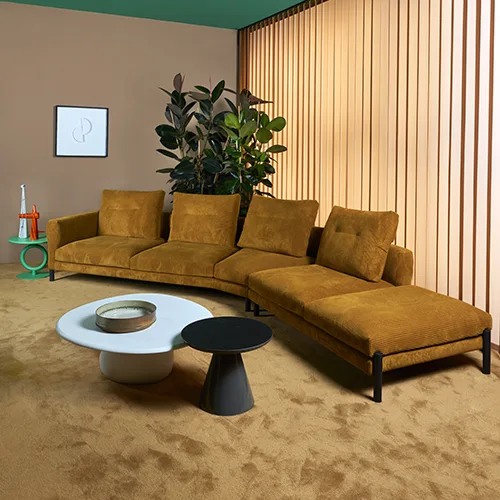
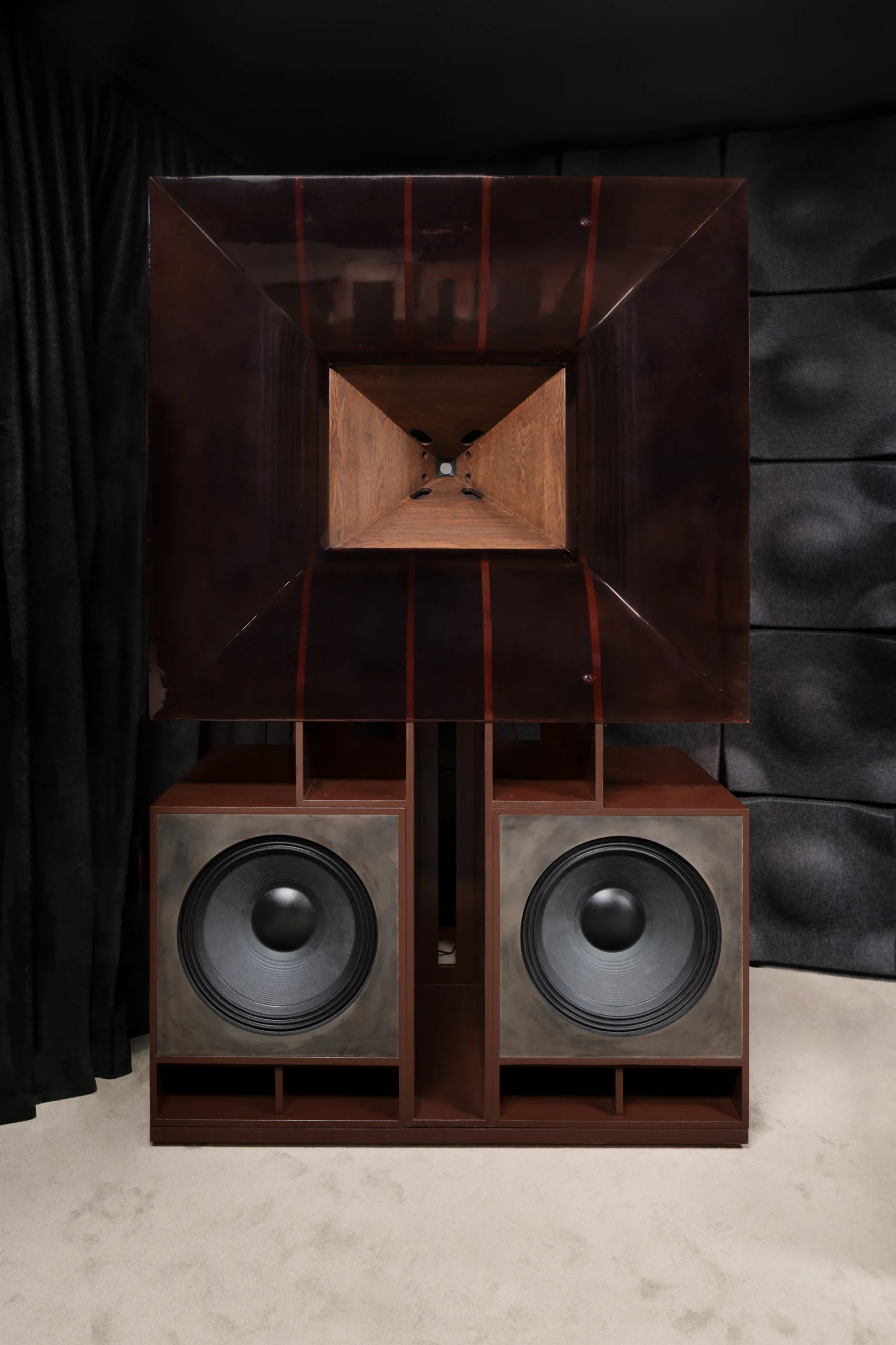
Some sounds immediately catch our attention, while others quietly become part of our everyday lives. The buzz of an open-plan office, footsteps along a hotel corridor, the echo in a meeting room, or the scrape of a chair across a hard floor.
Noise is one of the factors that most influences how we perceive a space, yet it is often one of the least considered. That is why acoustic comfort has become a central theme in contemporary design, where people’s well-being depends not only on what they see, but also on what they hear.
In this context, flooring is no longer just a functional surface. It can become an active element in improving the acoustic quality of a space, enhancing comfort and creating more enjoyable environments.
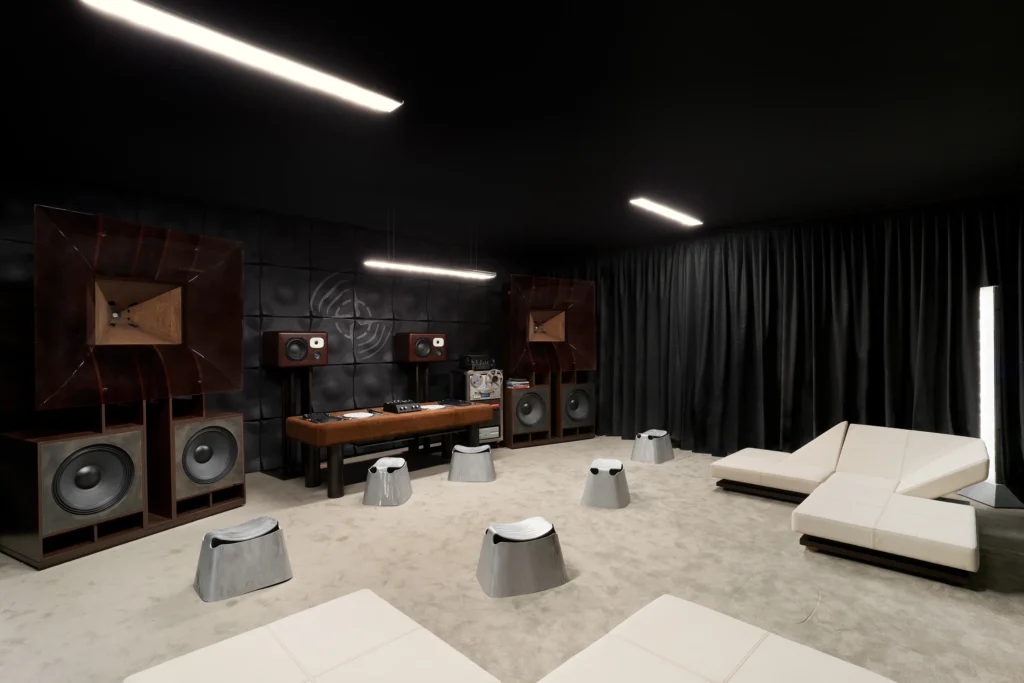
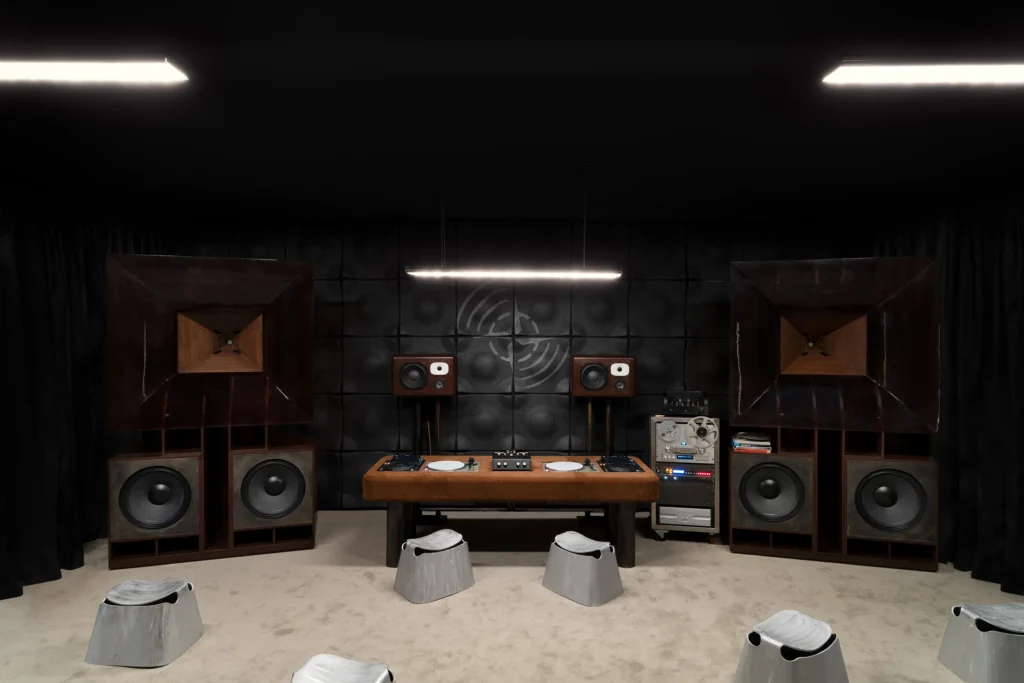
What Is Acoustic Flooring?
Acoustic flooring refers to flooring solutions designed to help control noise within a building. To understand how it works, it is useful to distinguish between two concepts that are often confused: sound absorption and sound insulation.
Sound absorption is a material’s ability to absorb part of the sound energy, reducing reverberation and improving the acoustic quality of a room. Sound insulation, on the other hand, refers to the ability to limit the transmission of noise from one space to another.
Both contribute to acoustic comfort, but they address different aspects of sound control.
Acoustic design also considers different types of noise: airborne noise, such as voices and music; impact noise generated by footsteps; and reverberation, which is the persistence of sound within a room after the source has stopped.
Performance is generally measured using specific parameters, including decibels (dB), the ΔLw value that indicates the reduction of impact noise, and the αw coefficient, which describes a material’s sound absorption performance.
Why Carpet Is Naturally Acoustic Flooring
Among the different types of flooring available, carpet has characteristics that naturally enhance acoustic performance.
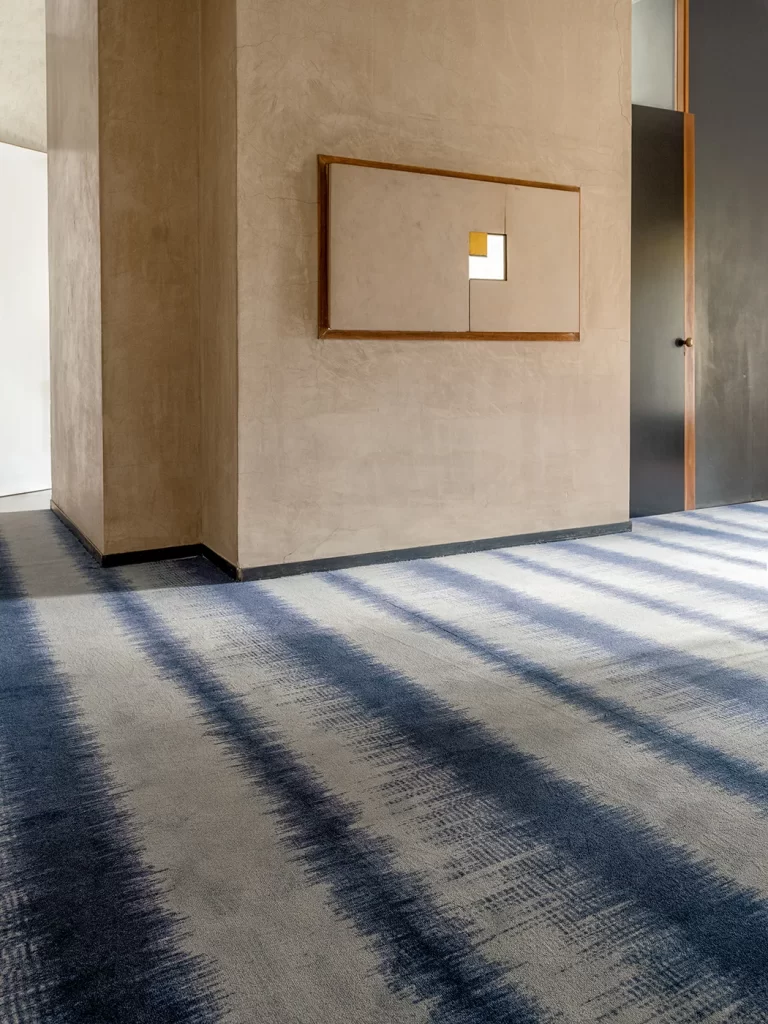
Its fibrous structure is made up of thousands of fibres that, together with the air trapped between them, help absorb part of the sound energy. Unlike hard surfaces, which tend to reflect sound, textile flooring reduces reverberation and creates quieter, more comfortable environments.
The pile also plays an important role. Its irregular surface helps dissipate sound waves, reducing the propagation of noise throughout the space.
The result is a more balanced acoustic environment, particularly appreciated in hospitality, workplace and entertainment settings.
How Much Can Carpet Reduce Noise?
The acoustic performance of textile flooring depends on several factors, including the product’s construction, the yarn weight and the type of backing used.
The contribution of carpet to acoustic comfort can be perceived from the very first step. When combined with geotextile backings specifically designed to enhance sound absorption, its performance improves even further, making the flooring an integral part of the overall acoustic strategy.
Many Radici Carpet collections can be paired with geotextile backings available in different weights and technical specifications, significantly increasing impact sound reduction. Depending on the selected configuration, footfall noise reduction can range from 23 to 34 dB.
In addition to reducing impact noise, carpet also helps minimise reverberation, improving perceived acoustic quality and enhancing speech intelligibility in shared environments.
Where Acoustic Flooring Makes the Difference
Acoustic comfort is becoming increasingly important in all environments where people spend a significant part of their day.
Offices and workplaces: noise is one of the main sources of distraction. Textile flooring helps reduce the sound generated by foot traffic and everyday movement, contributing to a quieter, more comfortable working environment.
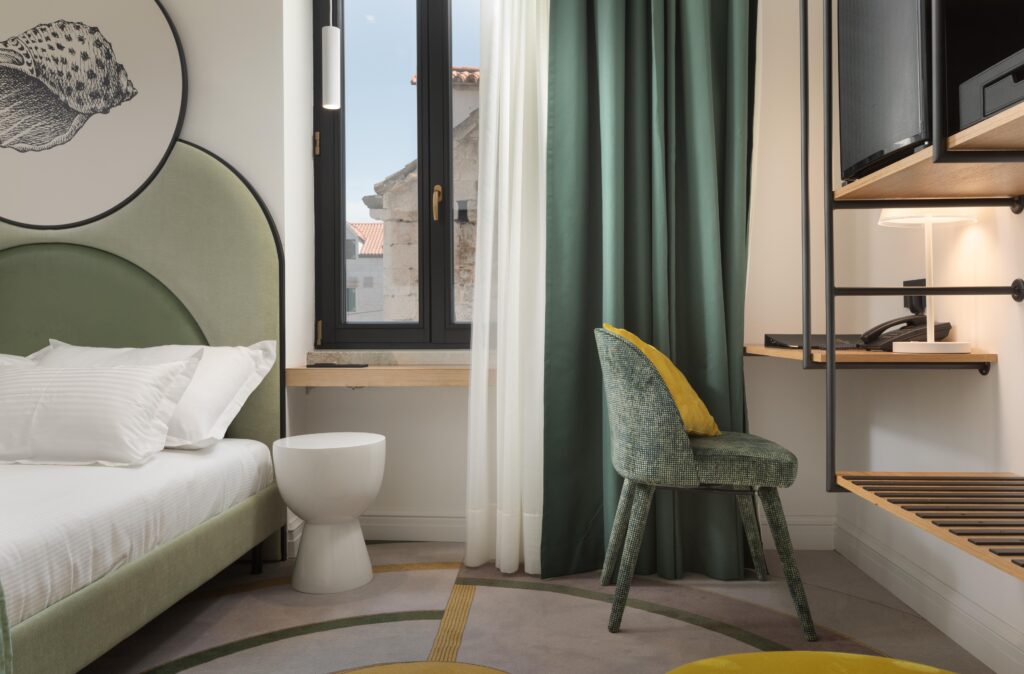
Hotels and hospitality environments: in corridors, guestrooms and meeting rooms, acoustic comfort has a direct impact on the overall guest experience. Reducing footfall noise and limiting sound transmission helps create quieter spaces that encourage relaxation and well-being.
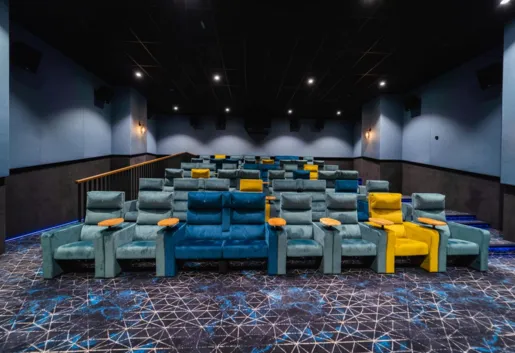
Cinemas, auditoriums and conference rooms: in these environments, acoustics are an essential part of the overall experience. Textile flooring helps minimise unwanted noise while improving the acoustic quality of the space, supporting the performance of the other acoustic elements within the design.
Acoustic Comfort According to Radici Carpet
At Radici Carpet, comfort is about more than what people see or touch. It is also about what they hear.
That is why many of our collections naturally offer excellent acoustic performance and can be paired with geotextile backings specifically developed to further improve impact sound reduction and overall acoustic comfort.
These solutions help meet the growing demand for projects focused on people’s well-being and the quality of indoor environments. They can also contribute to the achievement of requirements defined by international building certification schemes dedicated to health and occupant comfort, such as the WELL Building Standard.
Acoustic performance may also play an important role in meeting the requirements of applicable building regulations, supporting the objectives established within the project’s overall acoustic design strategy.
When Silence Becomes a Design Value
Acoustic comfort is one of those qualities that often goes unnoticed when it performs well, yet becomes immediately apparent when it is missing.
For this reason, the choice of flooring can have a far greater impact than many people realise, not only in terms of aesthetics or functionality, but also in shaping the everyday experience of those who use a space.
In contemporary design, flooring is no longer simply a surface to walk on. It is an active component of the built environment, capable of enhancing well-being, concentration and comfort. Sometimes, it does so through something as simple, and as valuable, as silence.
Recommended Products