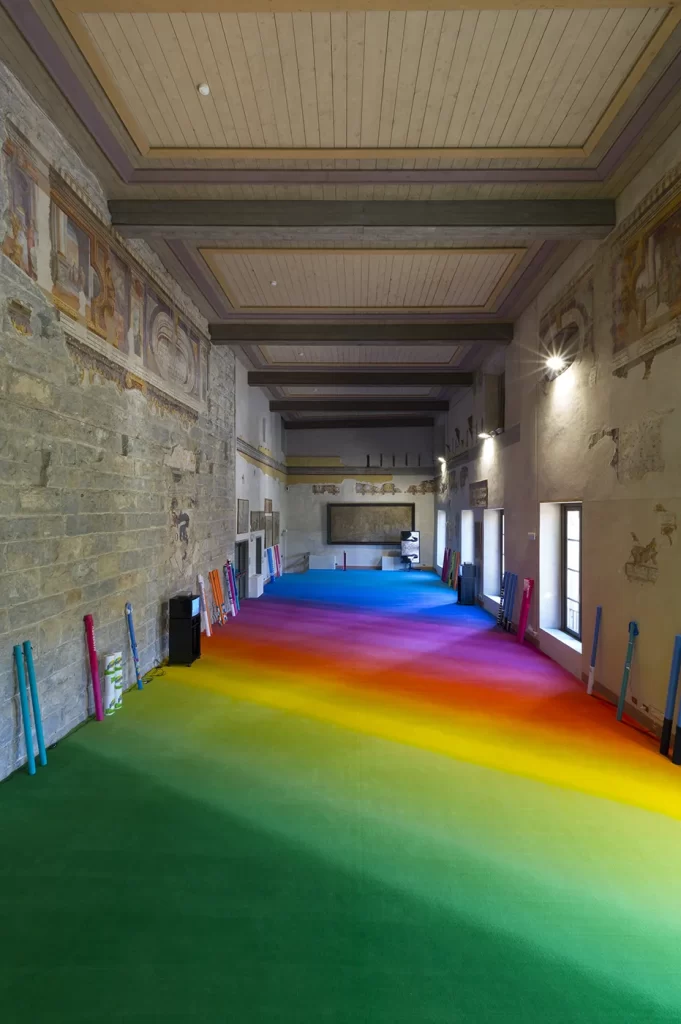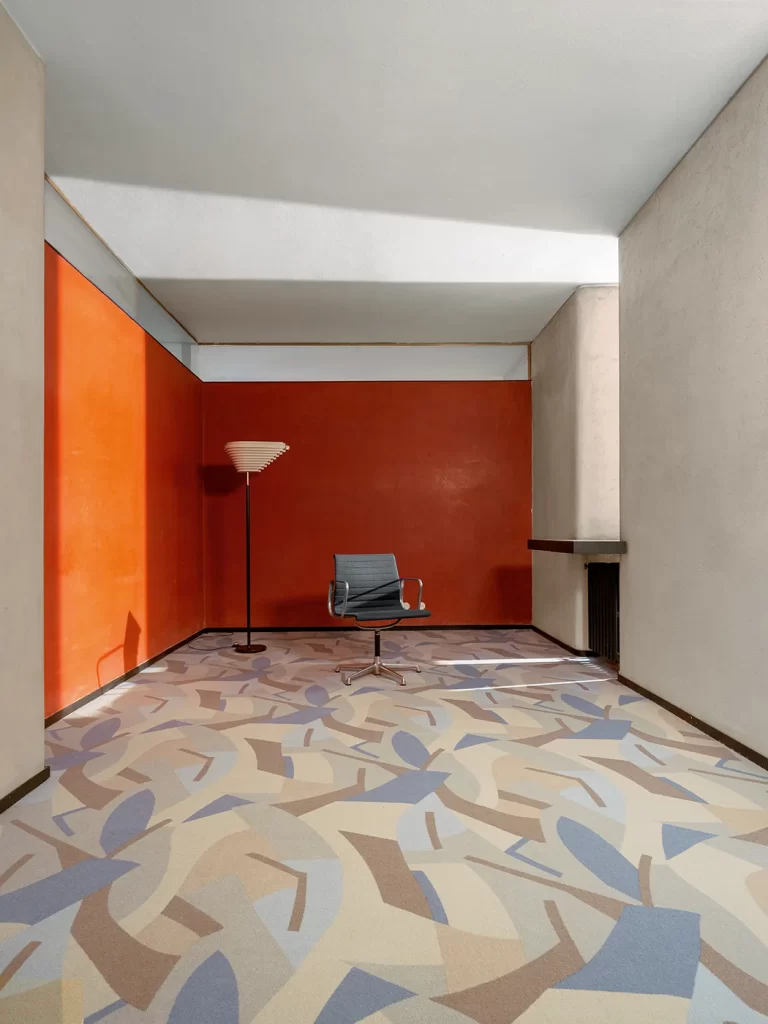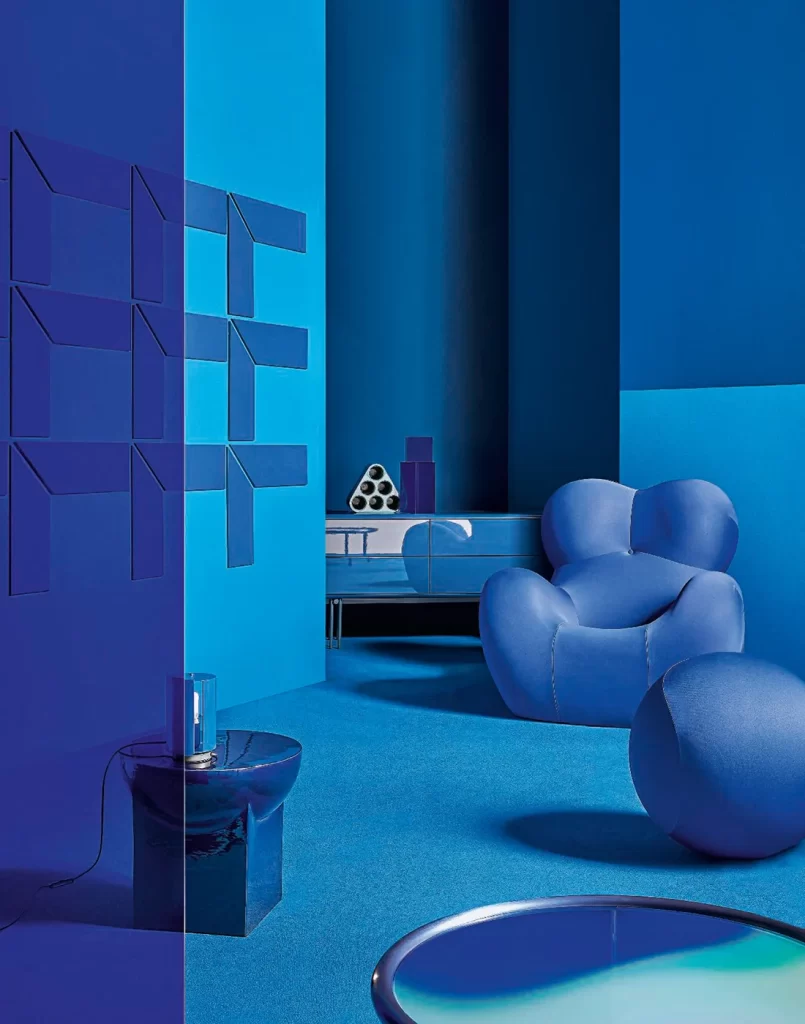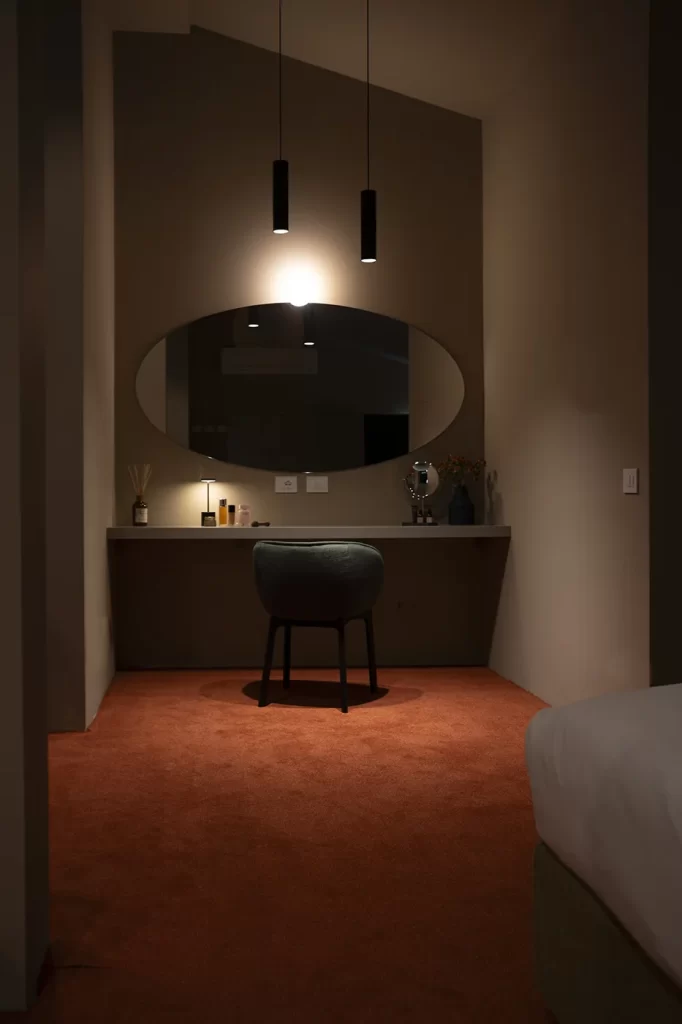
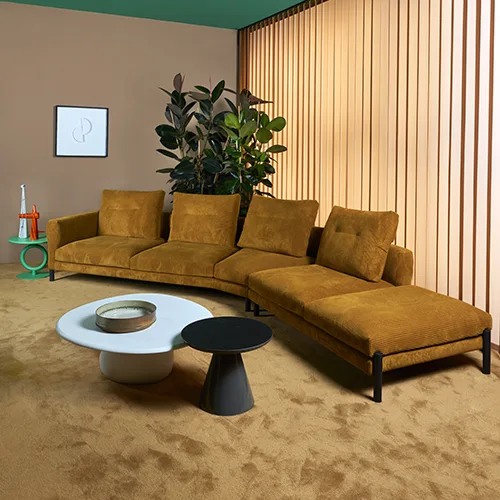
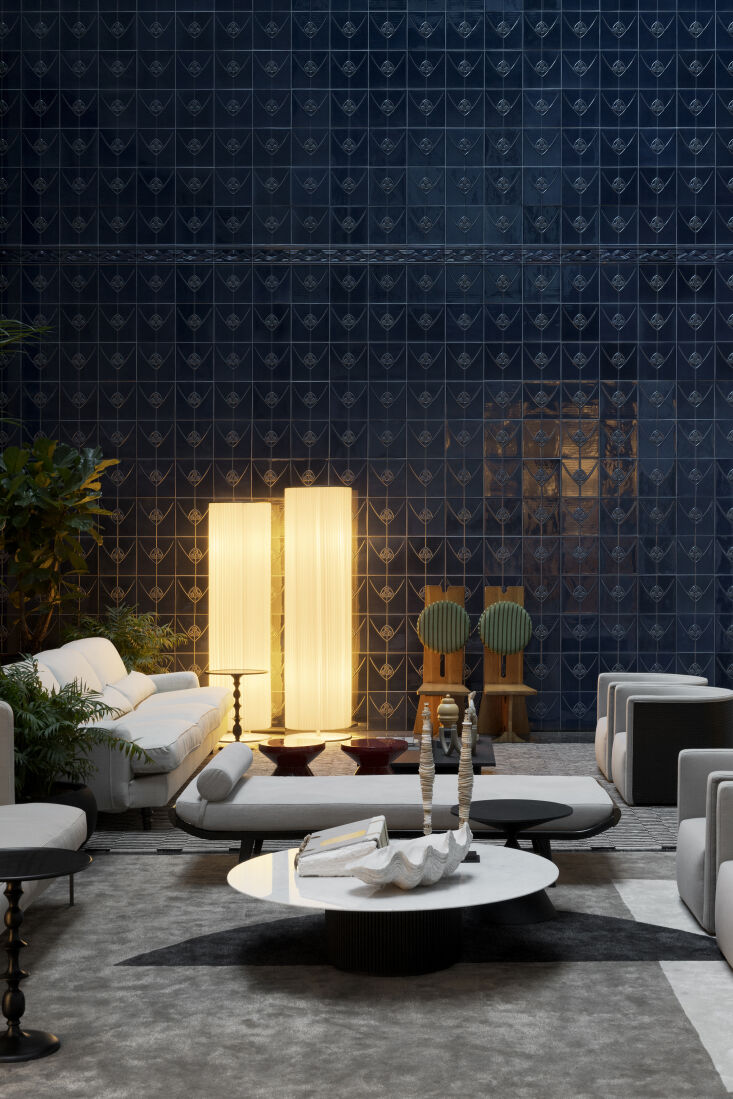
Today more than ever, carpet flooring has returned to the center of interior design projects. Architects and designers choose it for its ability to introduce material, color, and depth into spaces, while offering concrete benefits such as acoustic comfort, thermal insulation, and walking safety.
A well-designed carpet floor does not simply complete a space, it precisely defines its character.
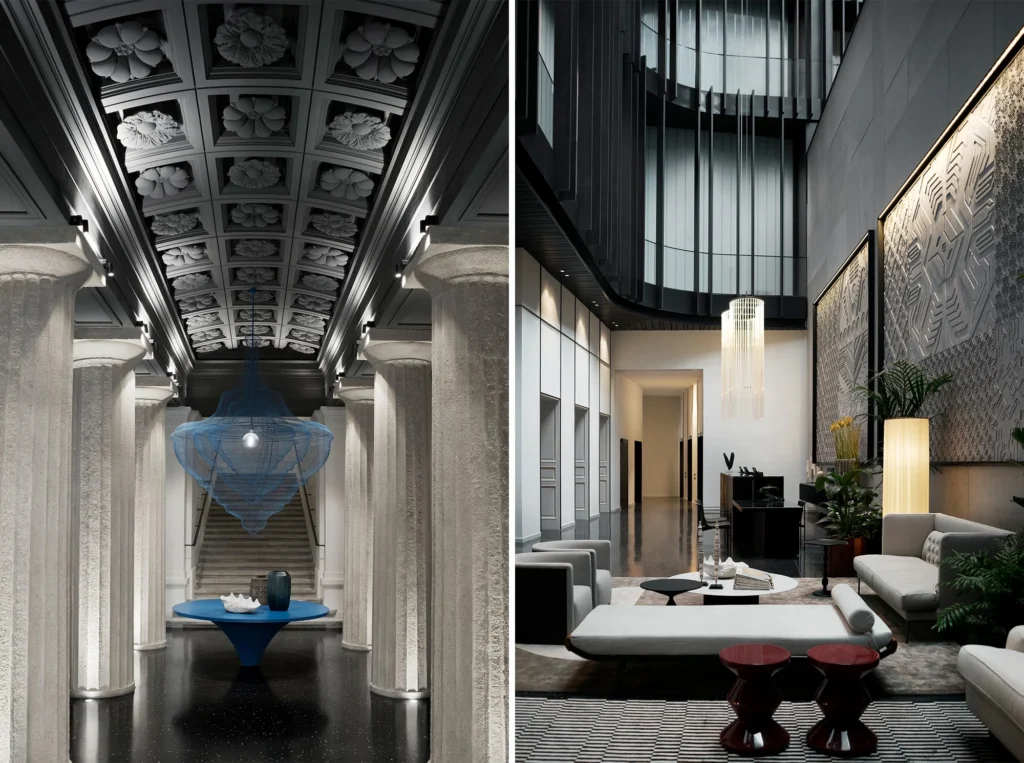
When designing a space, flooring is never just a functional surface. It is one of the elements that most directly shapes how an environment is perceived. It defines the atmosphere, interacts with architecture, and supports the way people experience a space.
At Radici Carpet, we have been working with this approach for over seventy-five years. For us, textile flooring is not simply a covering, but a design tool capable of transforming interiors and enhancing overall comfort.
Carpet for interiors is therefore much more than a technical solution. It is a surface that actively contributes to shaping the identity of a space.
Types of carpet flooring for interiors
Textile flooring encompasses a wide range of technologies, materials, and manufacturing techniques. Each project requires specific characteristics, and every environment presents different needs.
Among the most widely used solutions is tufting carpet, a production technique that allows for durable and versatile surfaces. This type of carpet flooring is particularly suitable for offices, hotels, and contract spaces where high foot traffic and long-term performance are essential.
Alongside this, woven carpets such as Wilton and Axminster offer a different approach. In these constructions, warp and weft are interlaced directly on the loom, creating rich, structured, and highly durable surfaces. This type of carpet is often chosen for hospitality projects and representative spaces, where flooring becomes an integral part of the architectural language.
In recent years, advanced printing technologies have also emerged, enabling fully custom carpet flooring with complex patterns and bespoke designs tailored to each project.
For us, this design freedom is essential. Textile flooring must be able to engage with the architecture of the space and reflect the identity of those who experience it.
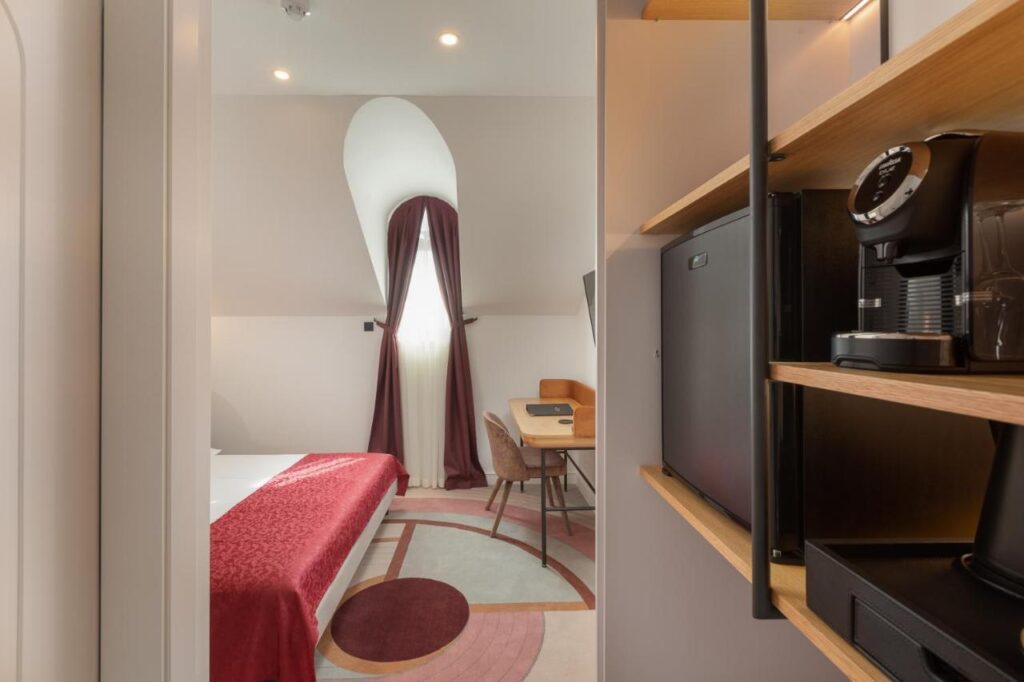
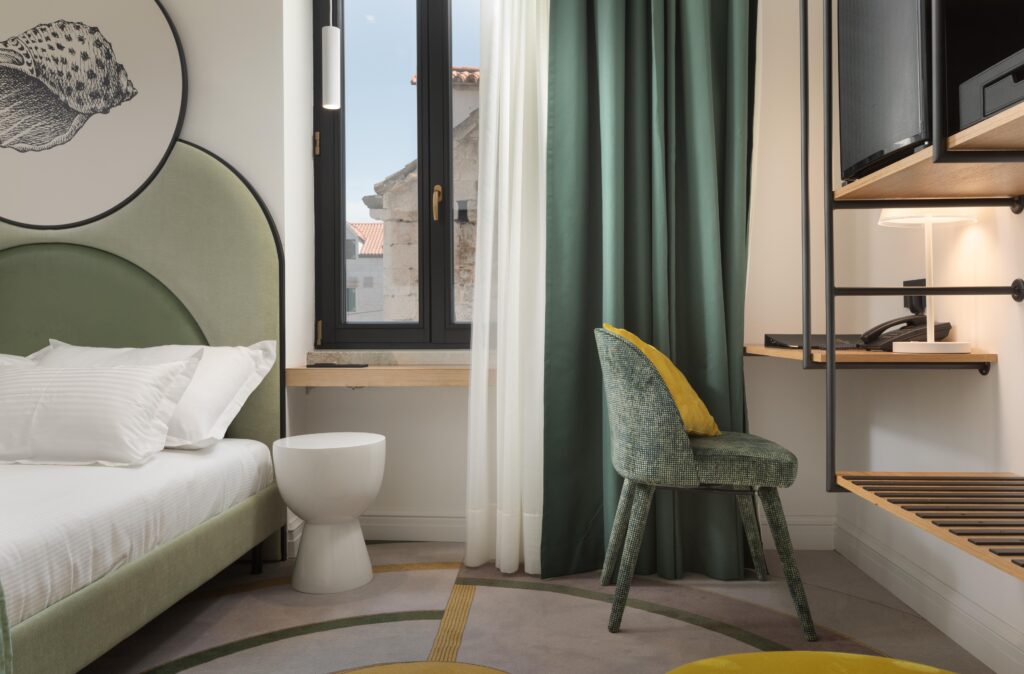
The comfort of textile flooring
One of the main reasons why architects and designers choose carpet for interiors is comfort.
The fibrous structure of carpet flooring absorbs part of the sound waves, helping to reduce footstep noise and improve the acoustic quality of a space. This aspect is particularly relevant in hotels, open-plan offices, and public environments, where sound control becomes part of the overall experience.
Textile flooring also provides effective thermal insulation. The fibers retain air, making the surface warmer and more welcoming compared to hard materials such as stone or ceramic.
Walking on carpet immediately conveys a sense of comfort that enhances the livability of interiors.
Safety is another important factor. Carpet flooring offers good grip and helps reduce the risk of slipping, which is why it is often selected for hotel corridors, conference rooms, and high-traffic areas.
Where to use carpet in interiors
The versatility of textile flooring allows carpet to be used across a wide range of design contexts.
In offices, carpet improves acoustic comfort and helps create more balanced working environments. Through the use of colors and patterns, it is also possible to visually organize the space, defining work areas and circulation paths.
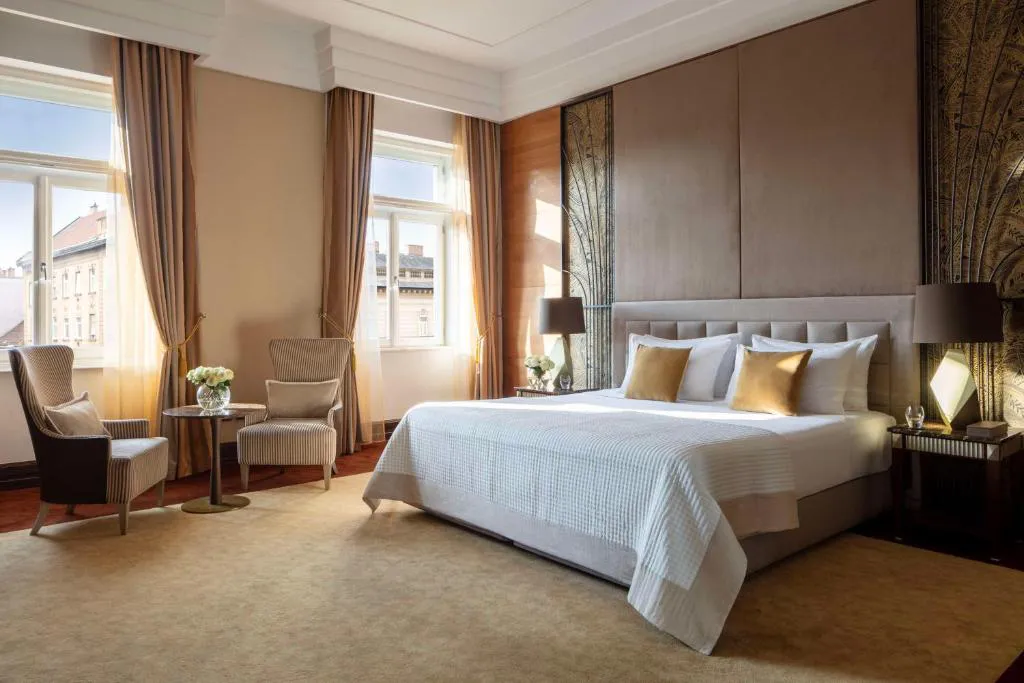
In hotels, carpet flooring is a natural choice. The textile surface immediately conveys a sense of hospitality and contributes to creating elegant, relaxing environments for guests.
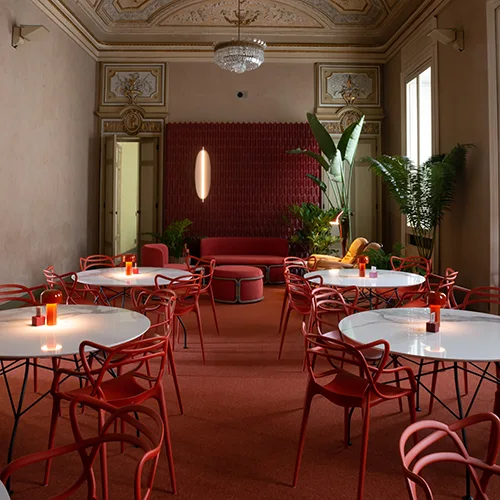
In retail and commercial spaces, carpet can also become a narrative element. The flooring design guides visitors and plays a role in shaping the overall spatial experience.
How to choose carpet for interiors
Choosing the right textile flooring depends on several factors.
The first is the level of foot traffic. In high-traffic environments, it is essential to select carpet flooring with technical features designed to ensure long-term performance.
The second aspect is maintenance. Modern technologies have made carpet flooring increasingly easy to manage, ensuring durability and ease of cleaning.
Finally, there is the design perspective. Colors, textures, and patterns must interact with the architecture and contribute to defining the identity of the space.
In this context, carpet for interiors is not an additional element, but an integral part of the project. Every textile flooring solution we develop starts from this approach: shaping spaces that welcome, perform over time, and deliver a genuine sense of comfort.
Recommended products